📅 06.01.2026
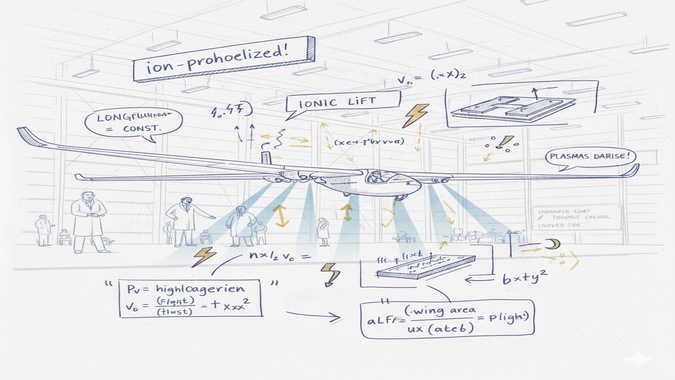
Propellerless Drones: The Future of Flight with Ionic Propulsion Technology
We are all familiar with traditional propulsion systems—drones that rely on rapidly spinning propellers and motors to stay airborne. But can you imagine a propellerless drone? A device that flies in complete silence, with no moving parts and minimal maintenance... This is becoming a reality through ionic propulsion technology!
What is Ionic Propulsion?
Ionic propulsion (also known as Ionic Wind) is a thrust system that works by rapidly ionizing air molecules. While traditional drones physically push air using blades, this technology moves air using electrical fields.
The system operates by applying thousands of volts of high-voltage electricity between electrodes. This voltage strips electrons from air molecules, ionizing them. The resulting flow of ions—an ionic wind—creates a force that requires no moving parts to generate lift. By moving through electrostatic forces instead of traditional motors, it minimizes friction and noise. As research progresses, this could transform future drones into completely silent aerial vehicles.
Research and Global Projects
While most drones today are still tethered to propellers, research into propellerless drones has reached an exciting stage. In recent years, major institutions like MIT, NASA, and the University of Bristol have been conducting groundbreaking tests on ionic propulsion prototypes. While currently limited to small and lightweight aircraft, these systems are expected to become more powerful and scalable in the coming years.
Advantages of Propellerless Drones
- Silent Flight: Flying without any mechanical noise makes these drones invaluable for covert operations, urban logistics, and wildlife observation.
- Minimal Mechanical Parts: Lacking motors and propellers means less risk of mechanical failure and significantly lower maintenance requirements.
- Eco-Friendly Technology: Reduced noise pollution and the potential for higher energy efficiency pave the way for more sustainable aviation projects.
Current Challenges and Limitations
When will this technology become part of our daily lives? Currently, propellerless drones are still in the experimental phase and are not yet ready for commercial mass production. Several hurdles remain:
- Low Thrust-to-Weight Ratio: Ionic propulsion cannot yet produce sufficient thrust for heavy payloads. It works for lightweight models, but falls short for heavy-duty cargo.
- Energy Density Issues: High-voltage requirements and current battery limitations hinder long-duration flights.
- Development Timeline: It may take another 10-15 years for this technology to be commercially viable, as improvements in efficiency, safety, and durability are still needed.
When Will Future Drones Be Available?
Ionic propulsion and propellerless drones have the potential to spark a revolution in the tech world. With stealth capabilities, environmentally friendly flight, and low-maintenance systems, these drones could transform numerous industries. While we are currently in the R&D stage, we are moving steadily toward a future where silent aircraft are a common sight in our skies.
MIT Project: The First Ionic Propulsion Flight (2018)
This video showcases the historic moment when MIT researchers successfully flew an aircraft without any moving parts for the first time. The flight was powered by an ionic propulsion system, which uses high-powered electrodes to ionize and accelerate air particles. This ionic wind was powerful enough to drive a 5-meter wide craft across a sports hall. Unlike the ion drives that have powered spacecraft for decades, this new system accelerates air particles to create lift. The researchers believe this technology could be used for silent drones and other innovative applications.